Happy New Year from frosty Chewonki Neck! We’ve had a very special year and are grateful that we connected with so many of you. We can’t wait to see you this summer!
From The Camp Office
2022 Enrollment
Some camp programs are already full. Please reach out to the Camp Office if you have any questions. If you have not enrolled for 2022 yet we recommend doing so as soon as possible.
Packing Lists
Packing lists have been updated. Please reach out if you have any questions.
Stay Connected With The Camp Community
We hope you’re staying in touch with your mates from camp last summer. We love hearing from you too! Send us stories, drawings, photographs, poems. Tell us what you’ve been up to. Share a favorite memory of camp this summer. We may even publish them in the next newsletter. Connect at camp@chewonki.org.
Upcoming Events

July 10: Bats of the World
Bats comprise nearly one-quarter of the world’s approximately 4,000 mammal species, yet humans continue to fear and misunderstand them. Bats do so much to help us survive, but now they need our help.
Our engaging slideshow, and interactive demonstrations, will introduce participants to the role bats play in ecosystems ranging from the Maine woods to the South American rainforests, to help dispel common myths about these flying mammals.
Participants leave the program with an appreciation for the tremendous diversity of bats in the world and for their irreplaceable niche in natural ecosystem.
Please note that we do not currently have any live bats for this presentation. Hosted by Shaw Public Library in Greenville, ME.

July 16: Fur, Feathers & Feet
A great program for children from pre-school through 2nd grade. Discover the differences and similarities between birds and mammals as we encourage active learning by dressing two students in our bear and bird costumes. Hosted by 7 Lakes Alliance in Belgrade, ME.

July 7: Skeletons
Vertebrates — including fish, amphibians, reptiles, birds, and mammals—are some of the most advanced creatures on the planet. We all have one main thing in common: an internal skeleton. Students will gain a better understanding of the skeletal system by looking closely at the bones of many different vertebrates while comparing them to their own skeletons. The assembly of our 16-foot Pilot Whale skeleton will give participants the opportunity to investigate the physiological adaptations these animals require to survive in the depths of the ocean. Please note there are no live animals for this presentation.
Hosted by New Gloucester Public Library.

September 9: Predators
Explore attitudes toward predators and reasons for their decline throughout history because of habitat loss and human interference. Discussion of current events emphasizes the importance of predators in maintaining the world’s ecological balance. Participants have the opportunity to study mounted animals and see three live, non-releasable predators. Hosted by the the Rumford Public Library.

July 2: Mammals of Maine
Come learn about our native warm-blooded vertebrates: Maine mammals. See samples from our collection of skulls, study skins, and other specimens and learn how an animal’s characteristics, such as their teeth, feet, and fur serve as clues to understanding each mammal’s adaptations, niche, habitat, and the role it plays in the food web. Hosted by 7 Lakes Alliance in Belgrade, ME.

August 7: Vernal Pools
Take a closer look at the seasonal nature of a vernal pool and the impact it has on amphibian and invertebrate life cycles. We will develop an understanding of how so many cycles can be supported by a wetland that holds water for only a few short months. Hosted by Shaw Public Library in Greenville, ME.
We hope you’re having a great winter. As the holiday season begins to wind down our thoughts turn to getting outside to enjoy winter activities. Wherever you live, there are plenty of ways to explore the outdoors and think about how the changing seasons impact where you live. One of our favorite adventures at Chewonki is identifying animal tracks. For areas that receive snowfall (like Maine) each new dusting provides a fresh opportunity to explore. Some other settings that are ideal for id’ing tracks are mud, sand, and soft garden soil. Remember that most of these animals are nocturnal. Therefore, first thing in the morning is a great time to look. We recommend that you do a quick internet search for id’ing animal tracks in the states where you live. You should be able to find lots of information, including printable charts to make comparisons. Have fun out there and keep in touch!
With best wishes from all your friends at Camp Chewonki!
Photo Contest
The Camp Chewonki Team would like to invite you to participate in a Photo Contest. We will be sharing the submissions in our January Newsletter.
How it works:
1. Take a photo that represents one or more of the following categories (nature, craft, recipe, seasonal).
2. Upload Photo using the button below
Rules
~Photos must be submitted by a parent, guardian or individual 18 years or older
~Must agree to the Photography and User-Submitted Content Release
Learn about Winter Adaptations
Join Kyle Wosner, Science Educator for Chewonki’s Traveling Natural History Program, as he teaches us about Winter Adaptations in this 5 minute Video
Get Crafty
Get crafty with Jessica Woodend, Science Educator for Chewonki’s Traveling Natural History Program, as she educates us on some winter animals while walking us through how to create them in Paper roll craft form (printout).
From the Kitchen
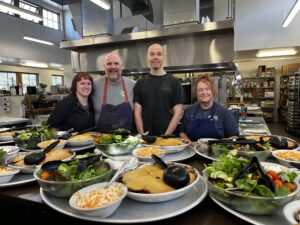
We serve Baked Oatmeal on a regular basis and it is a favorite. We’ve made it with frozen sliced peaches as well. It is particularly good with a dollop of farm yogurt! ~Susan

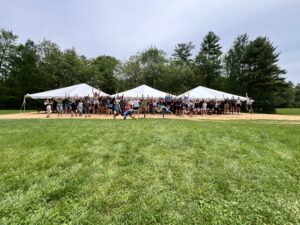
Orchard Field Dining Tent
We want to share an exciting update about our dining service for this summer. As we’ve built out our Eastside/Girls Camp program over the past

A Farewell and Thank You to Maine Coast Semester Program Director, Sarah Rebick
Dear Chewonki alumni & friends,
I would like to provide an update about a transition in leadership at Maine Coast Semester for the upcoming year. I have made the difficult decision to reorganize our administrative staff, which includes eliminating the Maine Coast Semester director role and sharing those responsibilities among other members of the team.

Let the Sunshine In! Announcing the Launch of our New Agrivoltaic Solar Array
Wiscasset, Maine. The landscape of the Chewonki’s Eastside pasture has taken a brilliant new turn. Chewonki Foundation is thrilled to announce that construction of its