New 2022 Puffin Program Dates Announced
We are excited to announce that we have added more Puffin Program dates for summer 2022. We love Puffins!
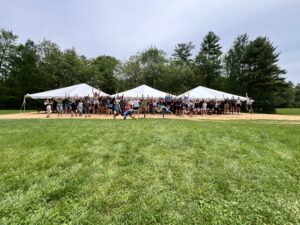
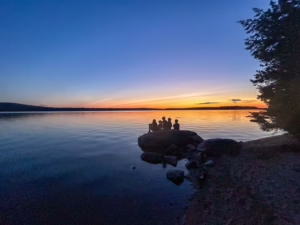
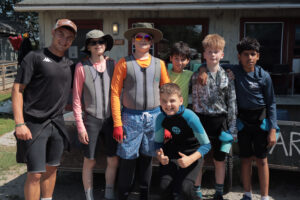
The Puffin Program provides participants, ages 8-11, with all of the laughter, learning, fun and friendship of Camp Chewonki, concentrated into 10 amazing days!
Camp Chewonki for Boys – Puffin Program
1a – June 26 – July 5
1b – July 9 – July 18 – NEW!
2a – July 22 – July 31
Camp Chewonki for Girls – Puffin Program
1a – June 26 – July 5
2a – July 22 – July 31
2b – Aug. 4 – Aug. 13 – NEW!
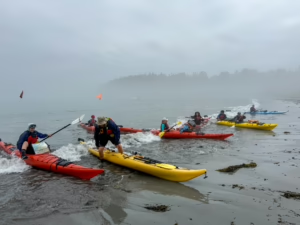
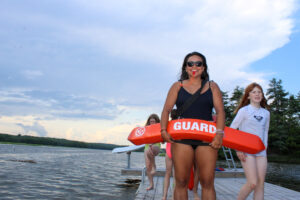
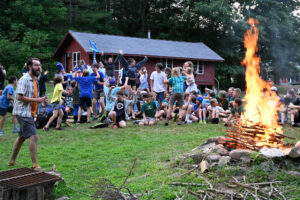
Our Puffin Program fosters development and provides an environment and structure that watches campers become more self confident. Puffins live in cabin groups of 8-10 with two cabin leaders. The program is a good balance of fun, knowledge and experience with daily camp activities such as outdoor living skills, farm and food systems, natural history, watercraft, and visual arts, along with the opportunity for free choice and general swim. Their experience culminates in a 3-day saltwater canoe camping trip, traveling to a campsite around Chewonki Neck. Their return to camp is celebrated by the community with a campfire and feast.
Upcoming Events:

July 10: Bats of the World
Bats comprise nearly one-quarter of the world’s approximately 4,000 mammal species, yet humans continue to fear and misunderstand them. Bats do so much to help us survive, but now they need our help.
Our engaging slideshow, and interactive demonstrations, will introduce participants to the role bats play in ecosystems ranging from the Maine woods to the South American rainforests, to help dispel common myths about these flying mammals.
Participants leave the program with an appreciation for the tremendous diversity of bats in the world and for their irreplaceable niche in natural ecosystem.
Please note that we do not currently have any live bats for this presentation. Hosted by Shaw Public Library in Greenville, ME.

July 16: Fur, Feathers & Feet
A great program for children from pre-school through 2nd grade. Discover the differences and similarities between birds and mammals as we encourage active learning by dressing two students in our bear and bird costumes. Hosted by 7 Lakes Alliance in Belgrade, ME.

July 7: Skeletons
Vertebrates — including fish, amphibians, reptiles, birds, and mammals—are some of the most advanced creatures on the planet. We all have one main thing in common: an internal skeleton. Students will gain a better understanding of the skeletal system by looking closely at the bones of many different vertebrates while comparing them to their own skeletons. The assembly of our 16-foot Pilot Whale skeleton will give participants the opportunity to investigate the physiological adaptations these animals require to survive in the depths of the ocean. Please note there are no live animals for this presentation.
Hosted by New Gloucester Public Library.

September 9: Predators
Explore attitudes toward predators and reasons for their decline throughout history because of habitat loss and human interference. Discussion of current events emphasizes the importance of predators in maintaining the world’s ecological balance. Participants have the opportunity to study mounted animals and see three live, non-releasable predators. Hosted by the the Rumford Public Library.

July 2: Mammals of Maine
Come learn about our native warm-blooded vertebrates: Maine mammals. See samples from our collection of skulls, study skins, and other specimens and learn how an animal’s characteristics, such as their teeth, feet, and fur serve as clues to understanding each mammal’s adaptations, niche, habitat, and the role it plays in the food web. Hosted by 7 Lakes Alliance in Belgrade, ME.

August 7: Vernal Pools
Take a closer look at the seasonal nature of a vernal pool and the impact it has on amphibian and invertebrate life cycles. We will develop an understanding of how so many cycles can be supported by a wetland that holds water for only a few short months. Hosted by Shaw Public Library in Greenville, ME.