Hours
Suggested visit time: 9:00 AM – 3:30 PM
Call us to coordinate your schedule.
Availability
Open Monday-Tuesday and Thursday–Friday during September–December and March–June.
Group Size
10-100 participants (groups smaller than 10 are welcome, but will be charged at the 10-person rate)
Supervision
All minors must be accompanied by a parent, teacher, or chaperone (we recommend 1 chaperone for every 10 children).
Lunch
Bring your own lunch! Picnic areas are available.
Pricing
$15 per student, no charge for chaperones. Groups smaller than 10 are welcome but will be charged at the 10-person rate.
Add-Ons
Enhance your visit with a few extras, availability dependent on weather, season, and group size.
- Low Ropes Course (3 hrs with a few low elements) – $300 per group of 10
- 1-hour Natural History Presentation with live animals $350 per group of 30
- Binoculars and Bird Guidebook Rentals – $50 per group of 10
- Instructor-led Seasonal, Nature-based Activity or Craft (see below for full descriptions) – $25 per group of 10
Nature-based Activity Options:
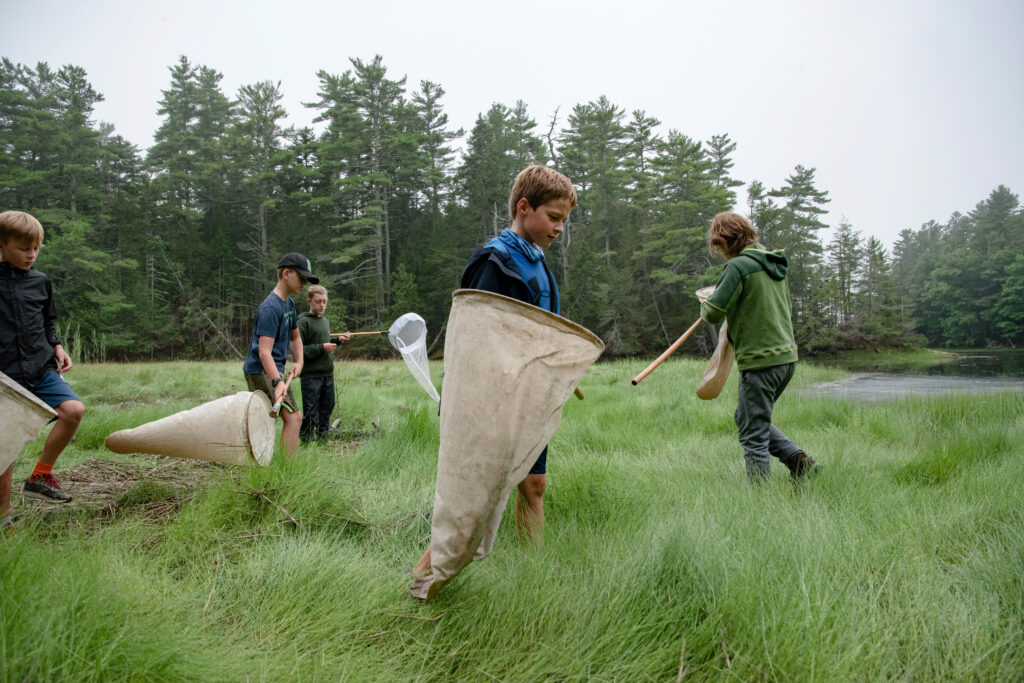
Pond Study
Our small ponds, bogs, and vernal pools contain diverse and vibrant communities of plants and animals. Take a peek into this world by learning about the water cycle, the food web of the flora and fauna,and observe macroinvertebrates and amphibians up close and personal.
Animal Study
Claws or wings? Fur or scales? Beaks or teeth? Why do animals look so different from each other and what can we learn about how they live their lives from the way they look? Learn about the ways that animals in Maine have adapted to their environment through play and interaction with genuine animal artifacts.
Estuary Study (Tide dependent)
Estuaries are home to an array of plants and animals who thrive in the dynamic tidal river environment. Students will learn about tidal forces, zonation, and the intersection of human industry and coastal ecology. Come down to the mud flats and see what organisms you can identify before the tide rolls back in!
Art in Nature
You might see the sticks, rocks, leaves, and moss you find on the forest floor as unremarkable; we see all the materials to make a beautiful and unique work of found art. Connect with the forest in new and creative ways, while learning about value, color, tone, and other foundations of visual art.
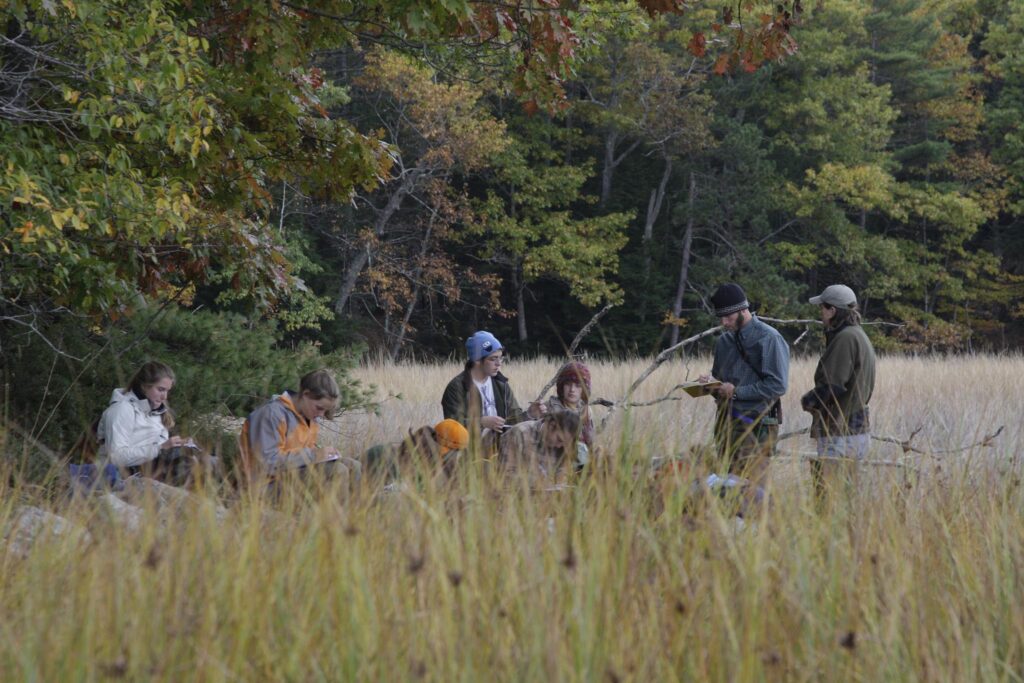
Nature Journaling
Using words, pictures, numbers, there is no wrong way to nature journal! Form a deeper connection with the world around you by using sensory observations to describe your experience in nature.
Winged Wonders
What makes a bird a bird? Learn about the diversity of birds and the unique adaptations they have that allow them to live in different ecosystems. Then, look for birds and evidence of birds on Chewonki Neck.